
By Rob Rohrbough
Text from Matthew 28:19
19 Go ye therefore, and teach all nations, baptizing them in the name of the Father, and of the Son, and of the Holy Ghost
A certain Christian apologist declared that the most important thing we can do is to carry out the Great Commission. What is that? To spread the Gospel. It is not about saving souls. That is up to God. This same man said that the next most important thing we can do is to defend our right to do the most important thing.
Take singing in a choir. It is not just praise. It is evangelism to everyone sitting in church on any particular Sunday or whenever and wherever the choir is singing.
What if those of us who sing didn’t have that right? With the war in Iran, we are seeing Christians persecuted all over the world. Too many in this country!
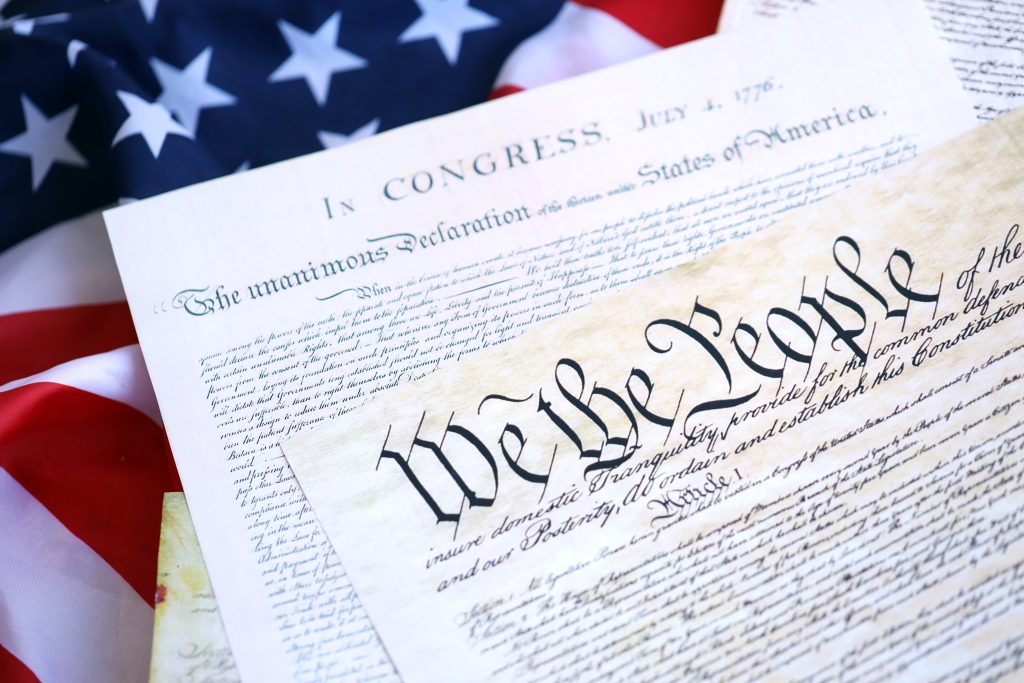
We are blessed to live in a country where Christian churches have been accepted and protected. Such is not the case in all countries or has always been in America. There is some debate about whether our country was founded as a Christian country. William Federer, in his video, “Miracles in American History”, pointed out four references to God in the Declaration:
- Laws of Nature and Nature’s God
- All men are created equal, and they are endowed by their Creator certain inalienable rights.
- Appealing to the Supreme Creator of the world for the rectitude of our intentions
- With a firm reliance on the protection of Divine Providence
Our Constitution was written with as few references to God as possible. This was not because our nation was “secular”; it was not — but because the states, all former colonies, varied by religion — Puritan, Congregational, Dutch Reformed, Quaker, Methodist, Presbyterian, Roman Catholic, etc. By necessity, the telltale signs of religion in the Constitution were generic enough to be acceptable to all of them:
- The exception of Sunday in Article I, Section 7
- “In the Year of our Lord” in Article VII
Is “Lord” here just another synonym for “God” or tradition of the time? Or does it imply a reference to our Lord and Savior, Jesus Christ? The early United States was not a secular country! In fact, it was 98% Protestant, 1% Catholic, and a trace of Jewish. It was formed by men and women who suffered tremendous hardship and danger to preserve or regain the freedom of Christian worship. Some died in that pursuit.
Is there value in protecting our right to praise and evangelize? The founders of our country thought so!